THE MATERIALS

What we use,
and why it matters.

A piece of jewelry is only as meaningful as the material it is made from — and only as honest as the craftsman's understanding of that material. We do not choose stones and metals for their market value. We choose them because each one carries a history and a character that no other material can replicate.

What follows is an account of the materials at the center of our work.

PART ONE

Gemstones

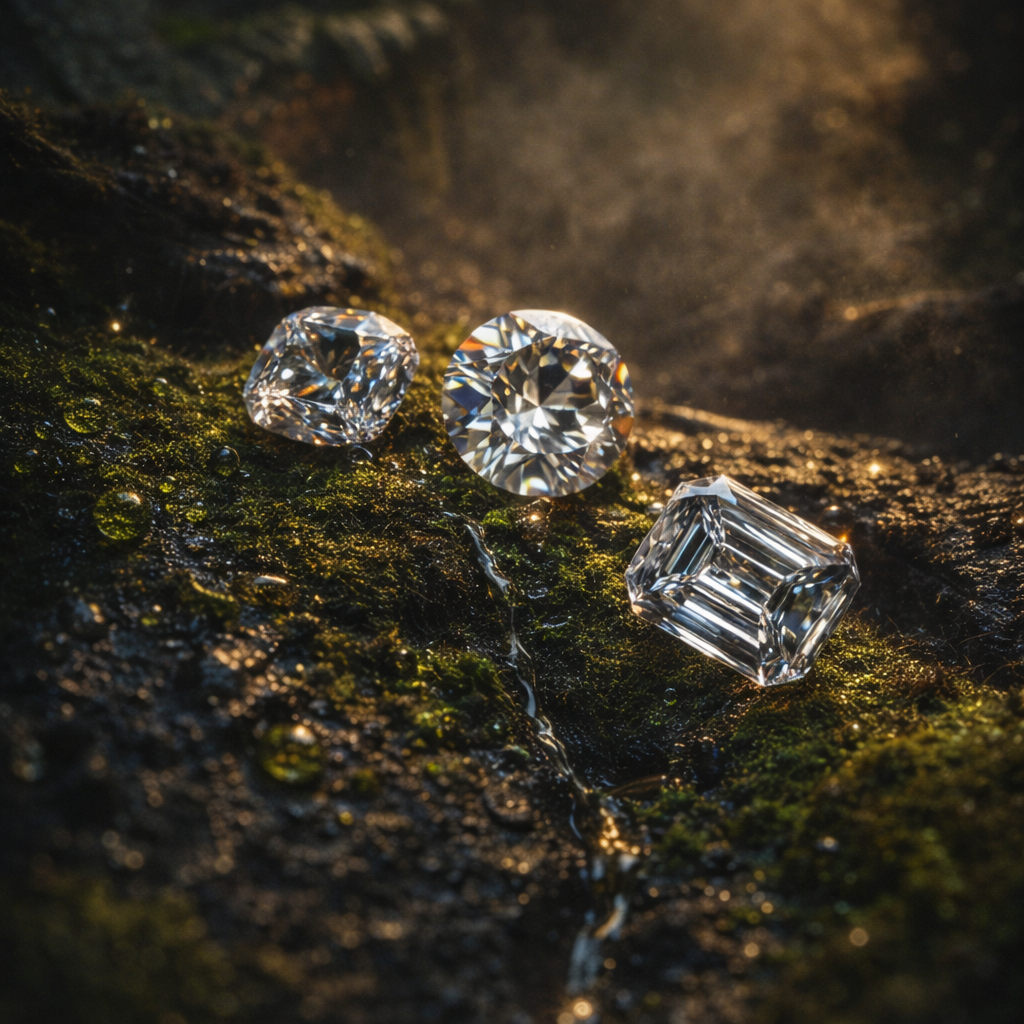
Diamond

The diamond was not always the symbol of romantic love. For much of human history, it was the symbol of invincibility — its name derived from the Greek adamas, meaning unconquerable. Roman soldiers wore diamonds into battle believing they protected against harm. Indian kings of the classical period considered them sacred to the gods.

What makes a diamond singular is not its brilliance but its composition: pure carbon, compressed under extreme pressure over billions of years until it becomes the hardest natural substance on earth. The same material that forms graphite — pencil lead — becomes, under the right conditions, a diamond.

At OURSA, we work with diamonds where the piece calls for permanence. Where something in the design or the commission demands material that will not yield.
Diamond — OURSA

Sapphire

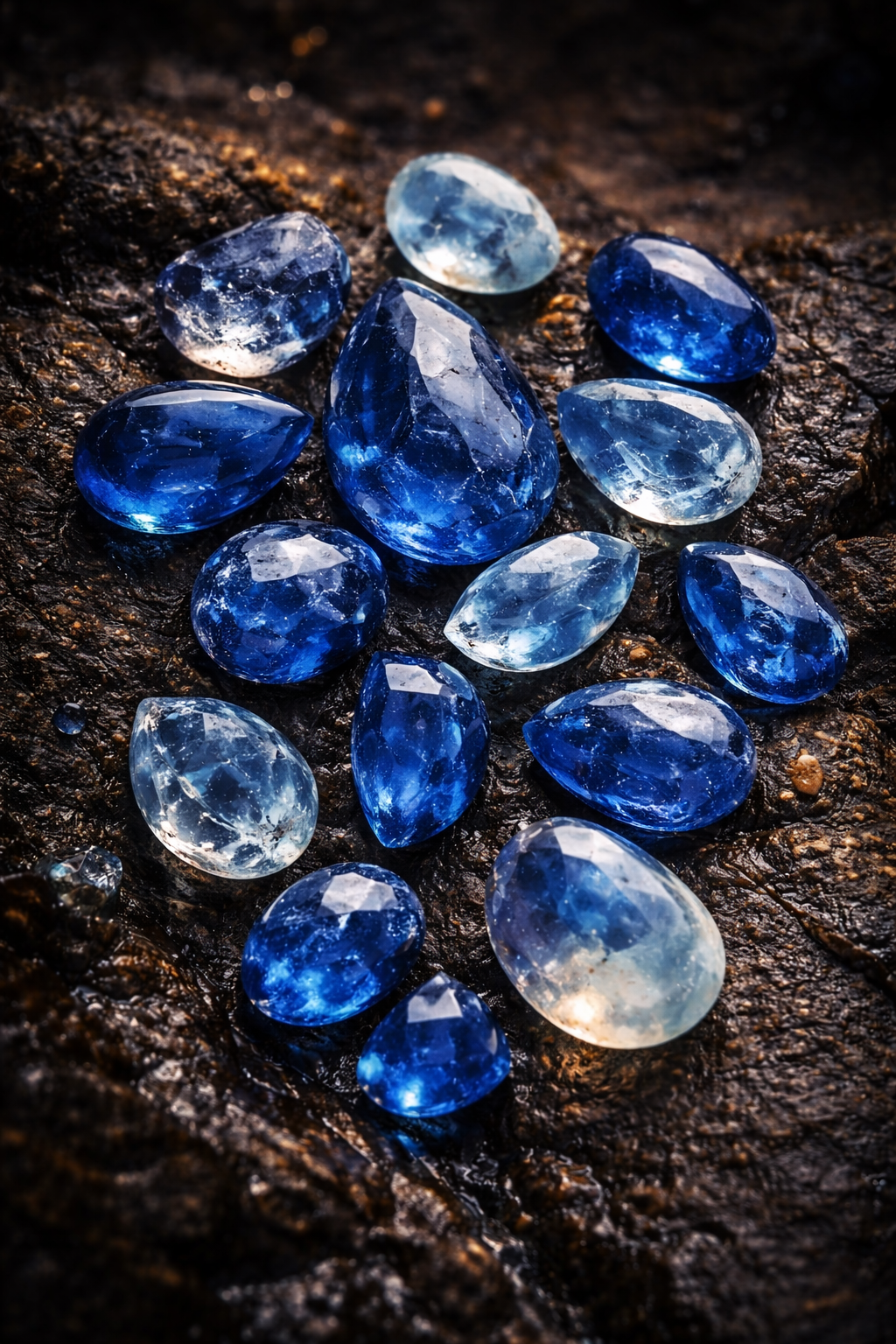
Before sapphires were blue, they were sacred. Ancient Persians believed the earth rested on a vast sapphire whose reflection gave the sky its color. Medieval clergy wore sapphires as symbols of heaven's favor. In the ancient world, sapphires were associated with truth, judgment, and the divine.

Chemically, a sapphire is corundum — aluminum oxide — with trace elements that shift its color. Titanium and iron produce the blue we associate with the name. But sapphires exist in nearly every color: pink, yellow, green, orange, and the rare padparadscha — a salmon-pink stone named after the lotus flower in Sri Lanka.

We work with sapphires in colors across their full range. The stone is one of the hardest on earth, carrying a brilliance that does not fade.

Sapphire — OURSA

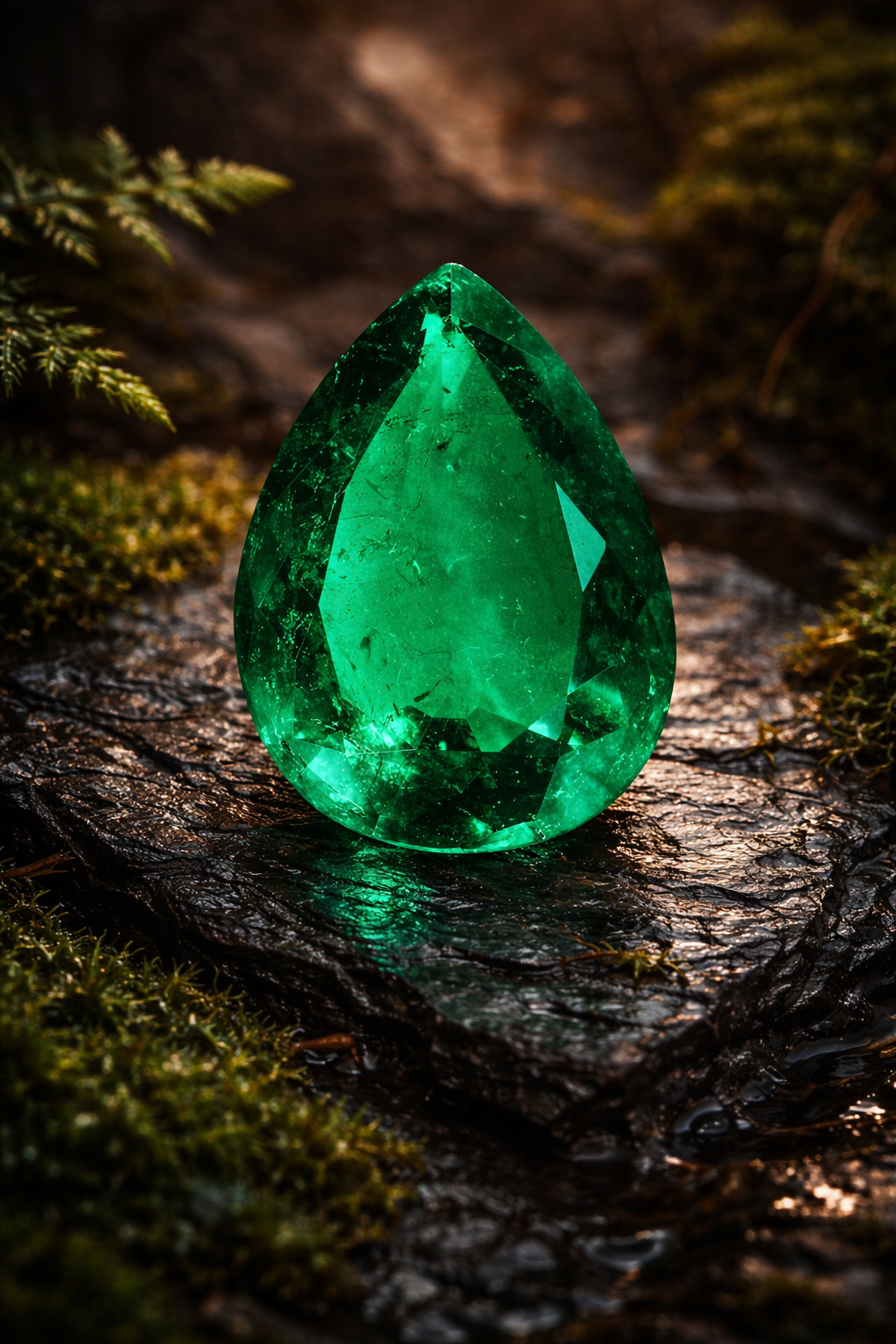
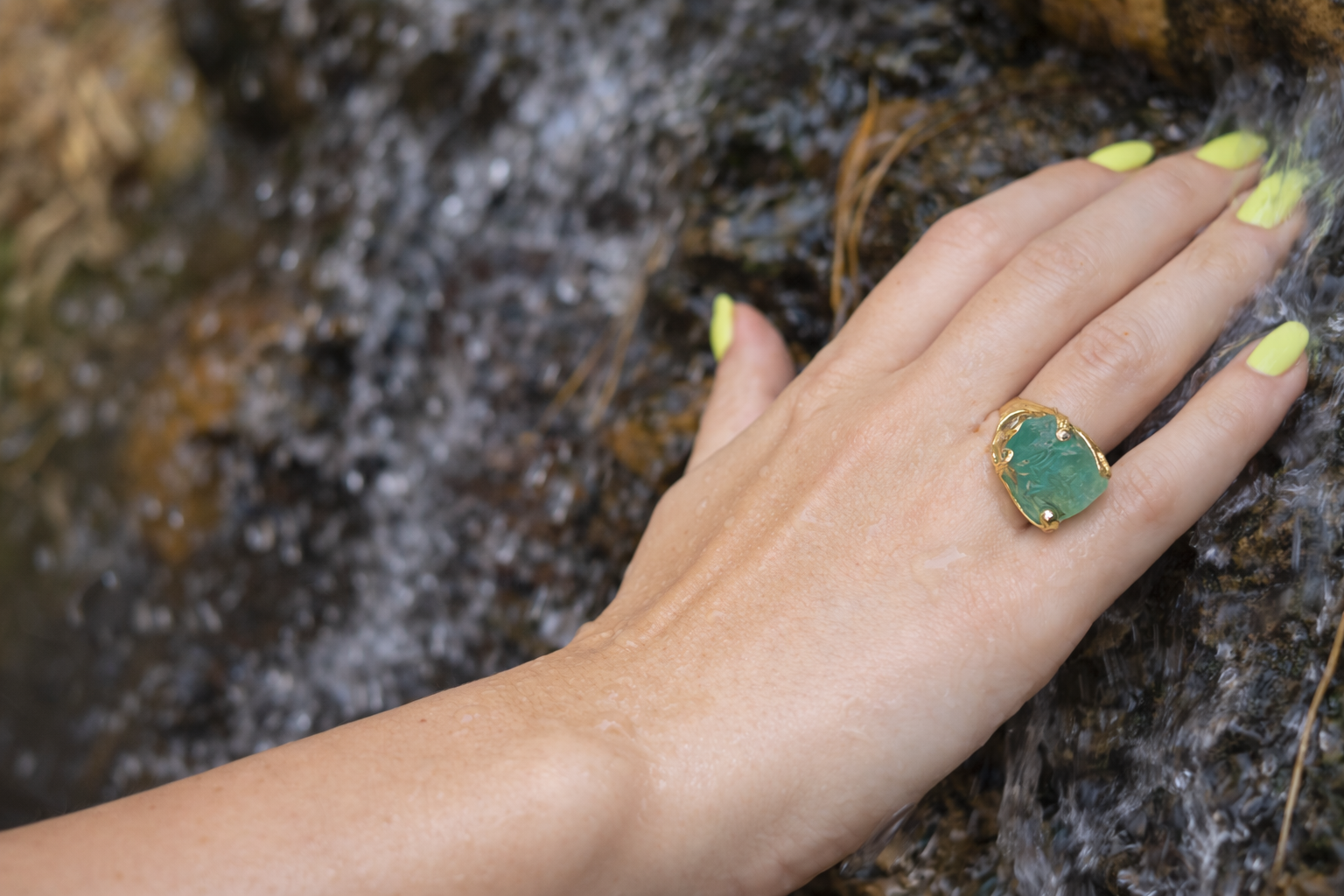
Emerald

Cleopatra's preferred stone. The stone of Hermes, of Venus, of the Aztec god Quetzalcóatl. Emeralds have been mined for over four thousand years, and in nearly every civilization that has encountered them, they have been associated with life — with growth, fertility, rebirth, and the renewal of the natural world.

The emerald is a variety of beryl — colored green by traces of chromium and vanadium. Unlike diamonds, emeralds almost always contain inclusions — internal fractures and foreign crystals — that gemologists call the jardin, the garden. These inclusions are not flaws. They are the stone's history, visible.

At OURSA, we choose emeralds for pieces connected to vitality and continuity. The stone that proves that imperfection and beauty are not opposites.

Emerald — OURSA

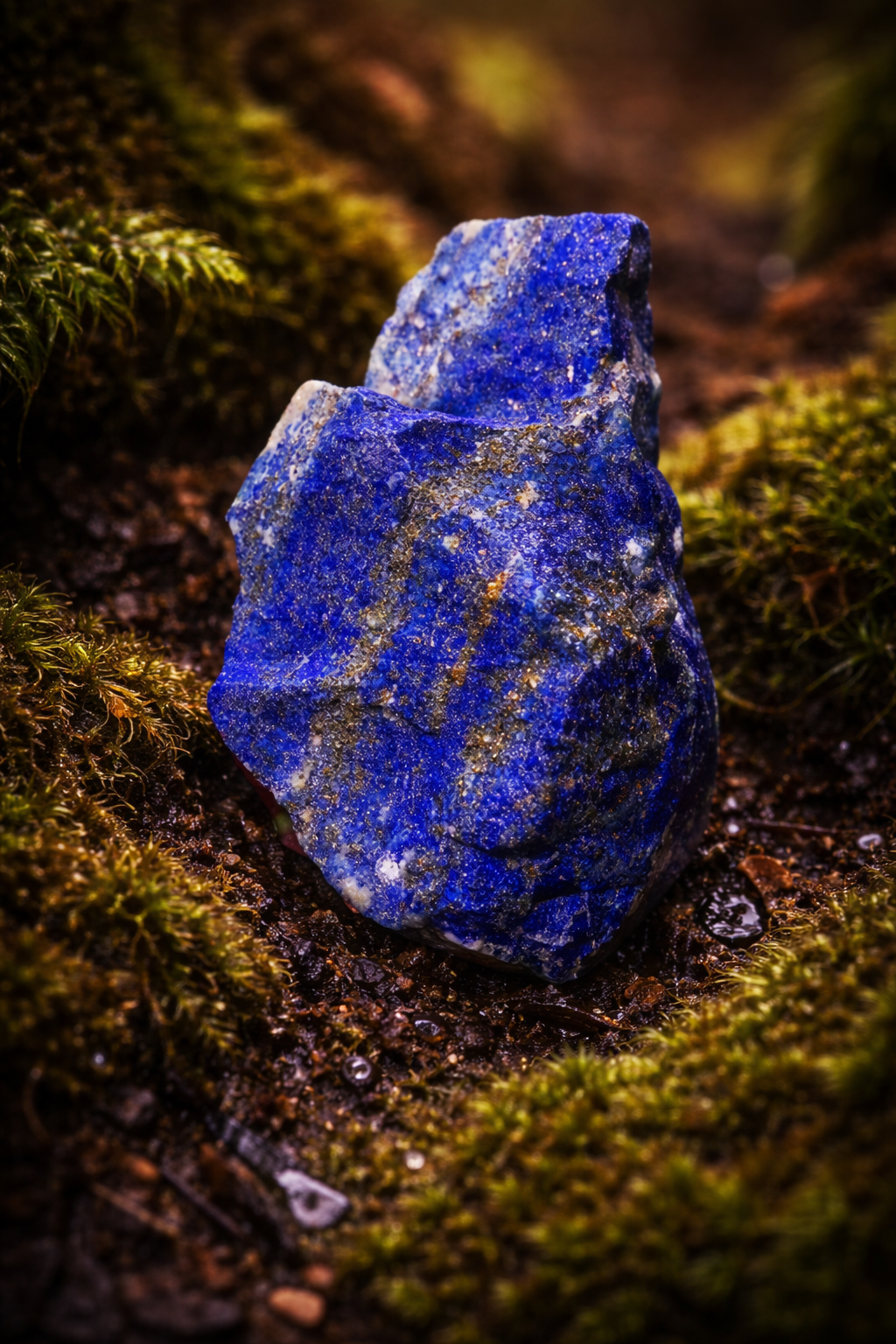
Lapis Lazuli

No stone is more deeply embedded in the history of human civilization than lapis lazuli. It was mined in the mountains of Afghanistan six thousand years ago and traded across the ancient world — through Mesopotamia, Egypt, Greece, and Rome. Ground into powder, it became ultramarine: the most prized blue pigment in the history of art, used by Renaissance painters who reserved it for the Virgin's robe.

In ancient Egypt, lapis lazuli was the stone of the gods. It was placed in the tombs of pharaohs and worn by priests during ritual. In Mesopotamia, it was ground and used in the earliest eye cosmetics. It carries the weight of the oldest human impulse: to find in a stone something that the visible world cannot offer.

We work with lapis lazuli for its depth, its history, and its irreplaceable character. A stone this connected to human civilization deserves to be understood, not merely worn.

Lapis Lazuli — OURSA

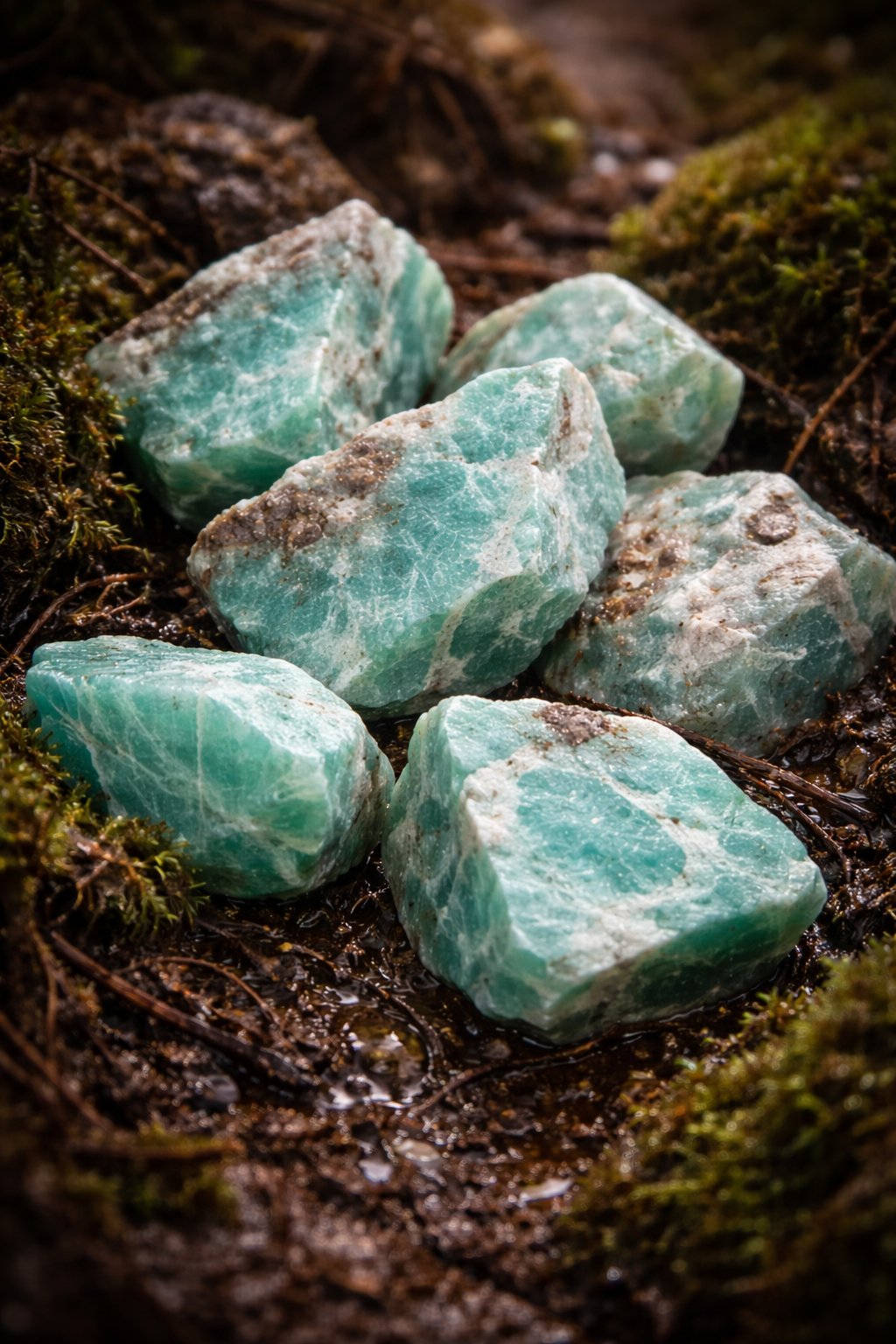
Amazonite

Named for the Amazon River, though it is not found there. Amazonite is a variety of microcline feldspar — its blue-green color produced by traces of lead and water. It was found in the tomb of Tutankhamun. It was used in ancient Egypt as a decorative stone carved into tablets and amulets.

In more recent history, it has been associated with clarity and balance — with the ability to see one's own truth without distortion. There is something in the stone's color — neither fully green nor fully blue, occupying the space between — that gives it a quality of calm intelligence.

Amazonite — OURSA

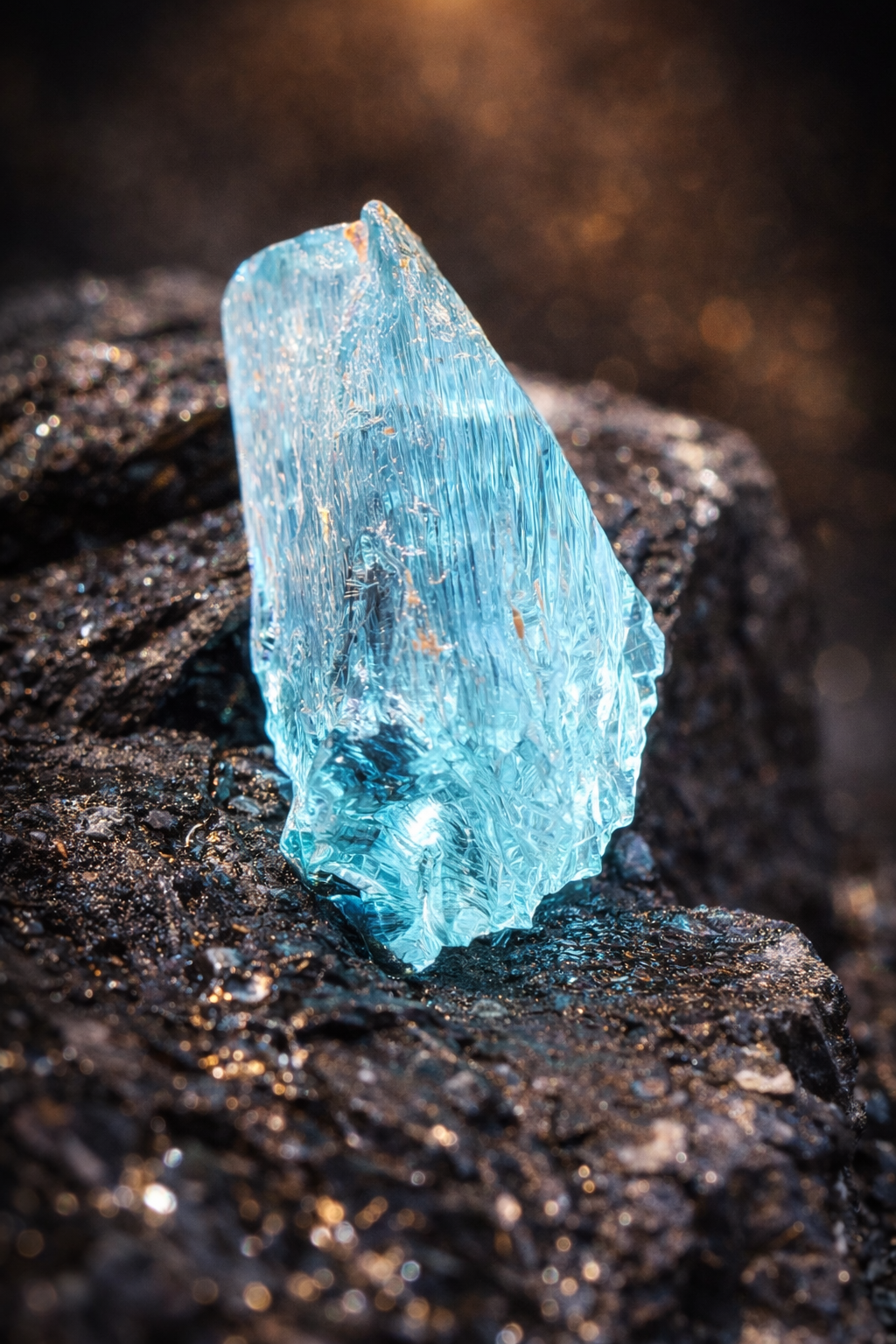
Aquamarine

The stone of sailors and navigators. Its name means sea-water in Latin, and for centuries it was believed to protect those who crossed the ocean. Roman fishermen wore aquamarine amulets. Medieval European sailors carried it as a talisman against storms and drowning.

Aquamarine is a variety of beryl — the same mineral family as the emerald, but colored blue-green by iron rather than chromium. It is a stone of clarity and courage: the courage required to move into unknown territory without being certain of the outcome.

We work with aquamarine for its quality of light — few stones hold and transmit light as purely.

Aquamarine — OURSA

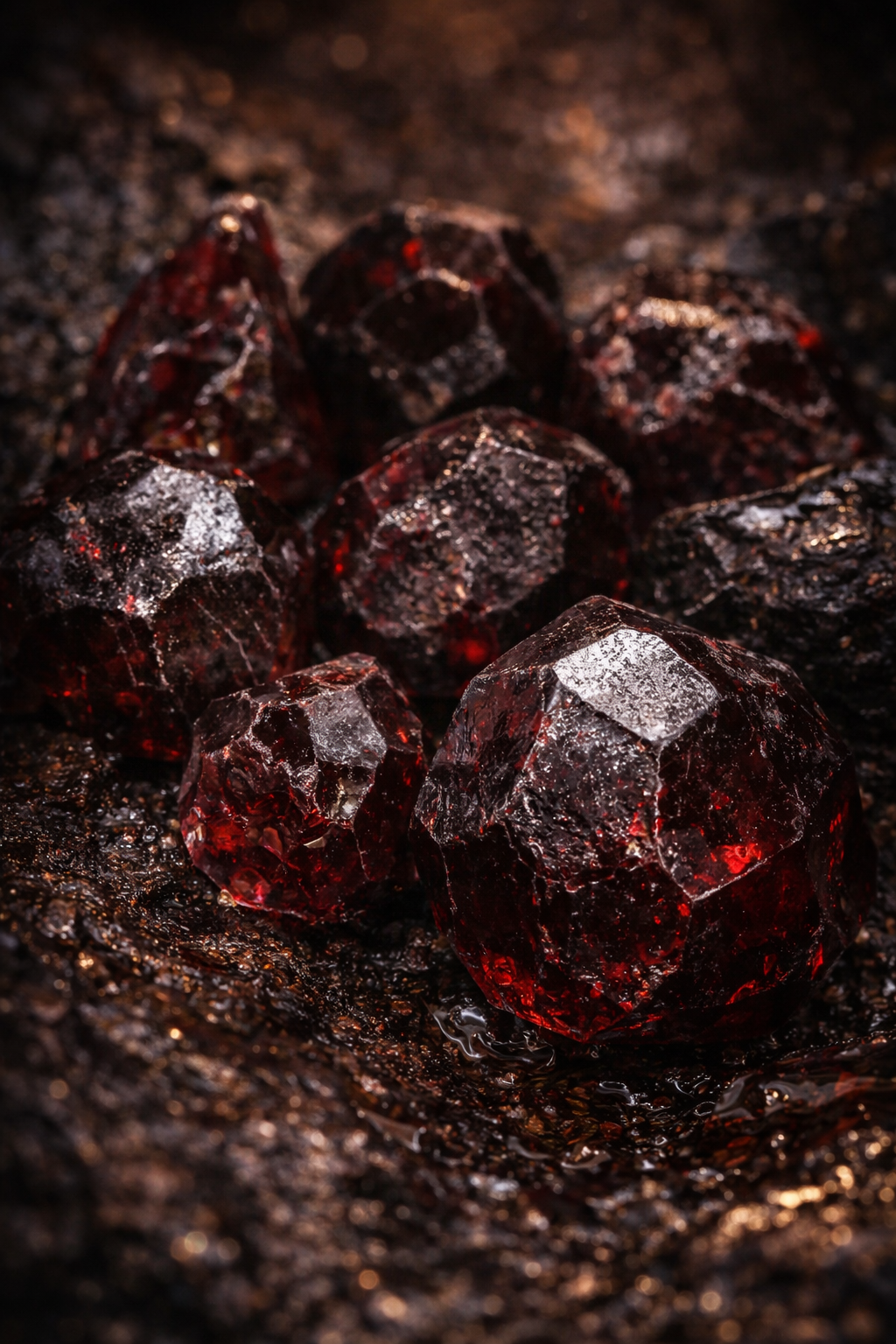
Garnet

Garnet is among the oldest stones used in jewelry. Carved garnets have been found in Egyptian tombs dating to 3100 BCE. In ancient Rome, signet rings were engraved into garnet — the hardness of the stone holding the impression of wax seals with perfect clarity. The name comes from the Latin granatus, meaning seed — a reference to the pomegranate seed, which the stone resembles in its deep red form.

Garnets exist in a wider range of colors than most people know: red, orange, yellow, green, and even colorless. Each variety has its own chemical composition and character. The red variety — pyrope and almandine — is what history has most associated with passion, protection, and vitality.

Garnet — OURSA

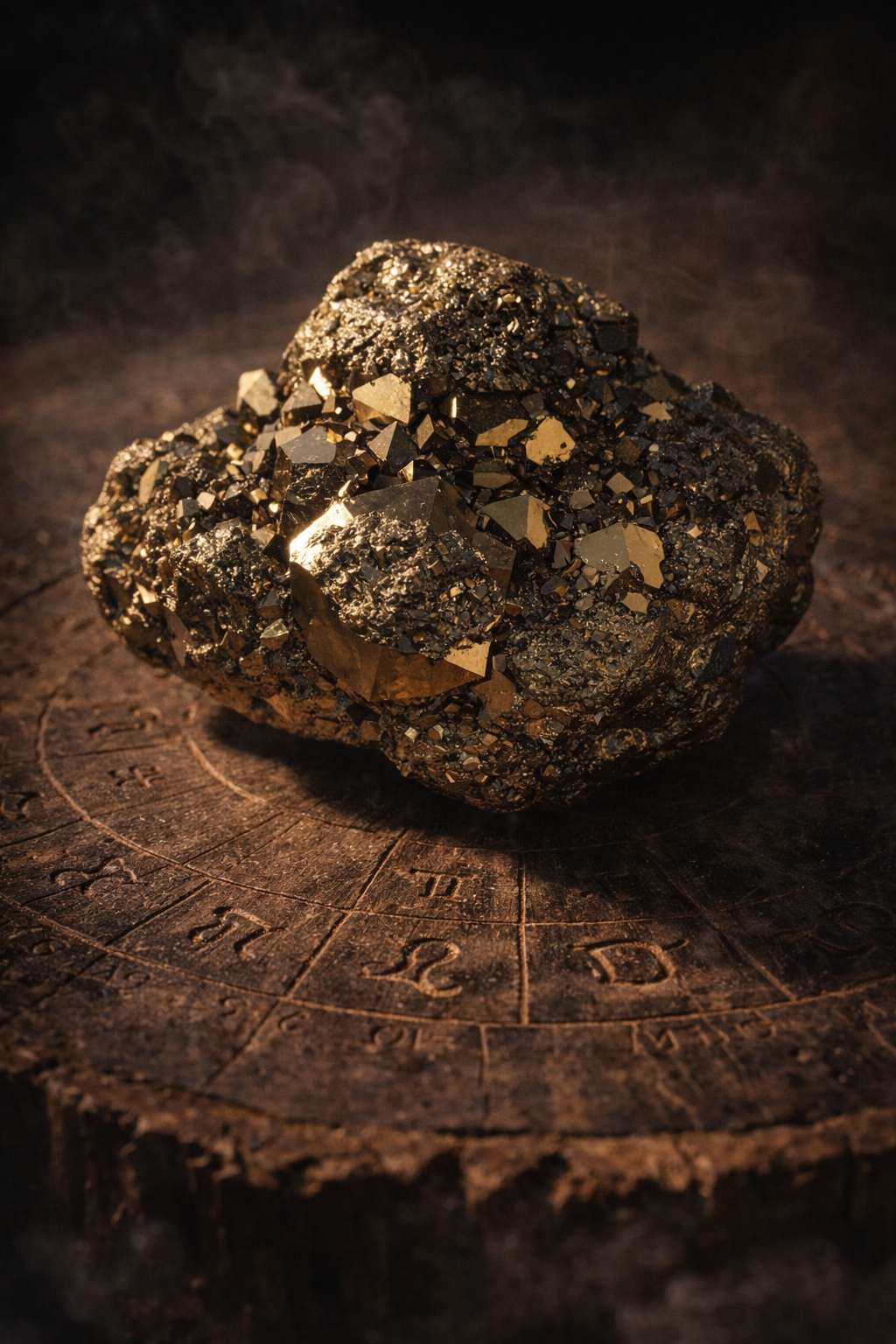
Pyrite

Fool's gold. The name carries the history: pyrite has misled prospectors for centuries, its metallic luster indistinguishable from gold to the untrained eye. Its name comes from the Greek word for fire — pyr — because it produces sparks when struck against iron.

But pyrite is not a fool's stone. It was used by indigenous peoples of the Americas as a mirror. It was found in burial sites across the ancient world. In alchemy, it was considered a solar stone — connected to the sun, to confidence, to the assertion of identity.

At OURSA, we use pyrite for its visual power and its historical character. It is not precious in the conventional sense. It is precious in the way that honesty is precious.

Pyrite — OURSA

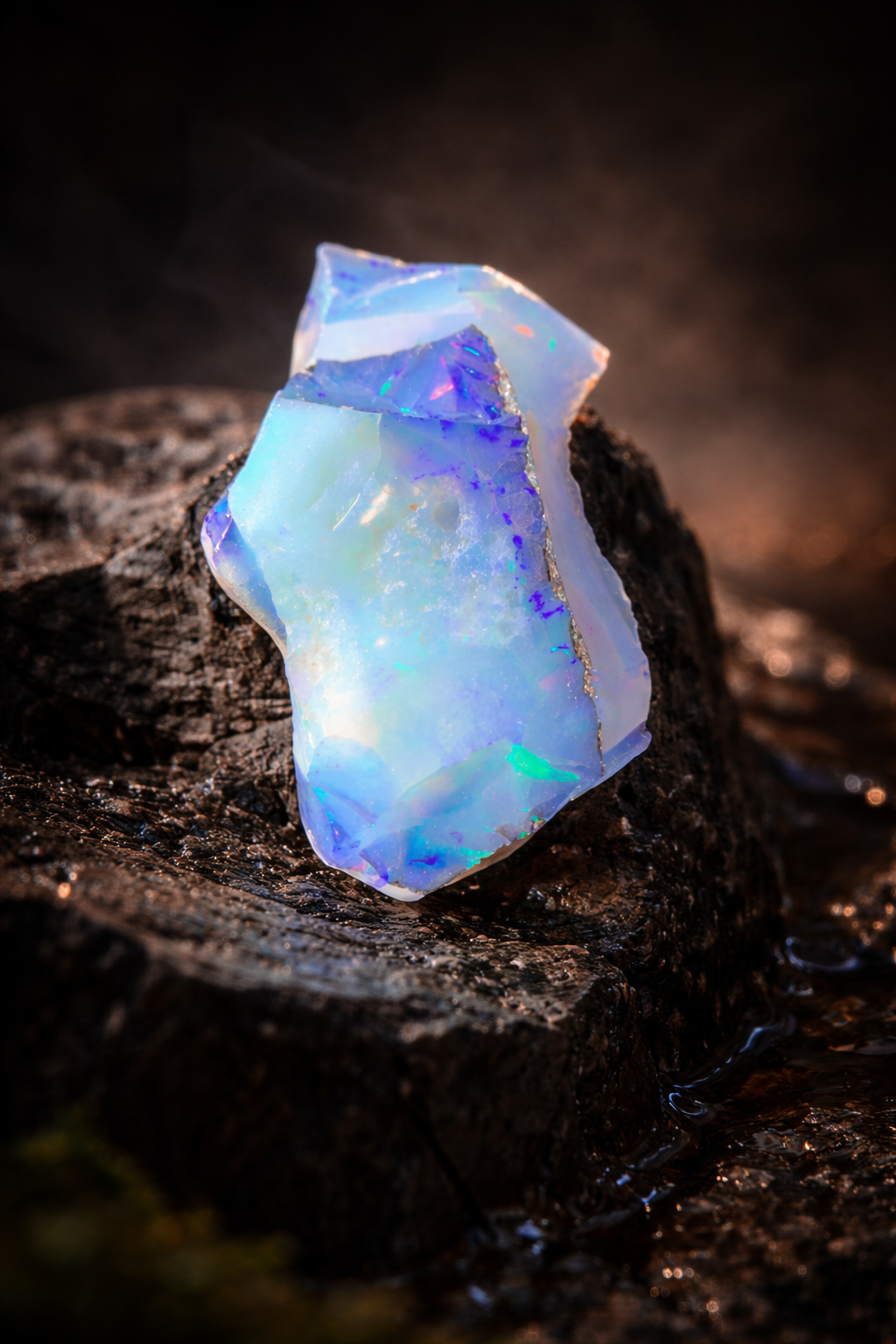
Opal

No other stone plays with light the way opal does. The phenomenon is called play-of-color — a structural interference of light through the microscopic silica spheres that form the stone's interior. Every opal is different. Every opal is unrepeatable.

In ancient Rome, the opal was considered the most valuable of all stones because it contained within itself the colors of all others. In Aboriginal Australian tradition — where the finest opals are found — the stone is considered a gift from the creator, placed in the earth as a sign of presence.

The opal is associated with imagination, with the full spectrum of human feeling, with the refusal to be reduced to a single color or a single meaning. We work with opals for exactly this quality. A stone that cannot be classified.

Opal — OURSA
OURSA — Gold
PART TWO

Metals

Gold

Gold is the oldest material in continuous use by human civilization. It does not tarnish. It does not corrode. It does not react to air or water. In this, it is almost unique among metals — a material that remains itself across all conditions and all time.

In ancient Egypt, gold was the flesh of the gods — Ra, the sun god, was said to have skin of gold. The pharaohs were buried in gold masks so their divine nature would endure beyond death. In ancient Greece, gold was the material of victory: the laurel wreath, the Olympic prize. In the ancient Land of Israel, gold was the material of the Holy Ark, the Menorah, the sacred objects of the Temple — the metal chosen to house what was considered most holy.

In Norse mythology, the halls of the gods — Valhalla — are described as roofed with gold. Odin's ring Draupnir dripped eight new gold rings every nine days, a symbol of divine abundance. Gold was not wealth in the modern sense. It was the closest material thing to the eternal.

At OURSA, we work with gold because of what it does that no other metal can: it holds. It holds light, it holds form, it holds meaning across generations. We work primarily with 18-karat and 14-karat gold in yellow, white, and rose.

Gold — OURSA

Silver

If gold is the metal of the divine, silver is the metal of the human. It is softer, more accessible, more willing to be worked. It has a different quality of light — not the warm glow of gold but a cooler, sharper brilliance that catches and throws light differently.

Silver has been mined and worked since at least 3000 BCE. In ancient Rome, silver coins — the denarius — were the currency of empire: silver as the medium of exchange, of value, of daily life. In ancient Greece, silver was sacred to Artemis, goddess of the moon — its pale light associated with the lunar cycle, with intuition, with the feminine aspects of nature.

In Norse tradition, silver was connected to protection. Silver weapons could harm what iron could not. Silver was hung at entrances to ward off harm and placed in water to purify it. The association between silver and purity runs through virtually every culture that has worked with the metal.

At OURSA, silver is worked in 925 sterling — the standard for fine jewelry — and in higher-purity forms for specific pieces. Gold speaks. Silver listens.

Silver — OURSA

Platinum

Platinum was unknown to the ancient world. The indigenous peoples of what is now Colombia worked with platinum alloys without understanding what the metal was — they called it platina, little silver, dismissing it as an impurity. European scientists of the 18th century first identified it as its own element.

But once understood, platinum proved to be extraordinary. The densest of the precious metals. The most resistant to corrosion. The most chemically stable material used in fine jewelry. Platinum does not fade, does not tarnish, does not change its color over time. A platinum prong holding a diamond will hold it for generations without degradation.

We work with platinum for the most demanding commissions — particularly for gemstone settings where security and permanence are paramount. It is not the warmest metal, but it is the most committed. When a piece must last without compromise, platinum is the material we choose.

Platinum — OURSA

These are not the only materials we work with — our knowledge extends beyond this list, and every commission opens its own conversation about what materials serve it best. If you have a stone in mind, or a metal, or simply a feeling, we are glad to talk.

Understand the human side of this work
YOUR STONE. YOUR METAL.

Leave your details and we will connect you with the metal and stone that represent you.

Tell us about yourself — what draws you to a particular stone or metal, what piece you are imagining, or simply that you are curious. We will take it from there.

We reply within 1–3 working days.