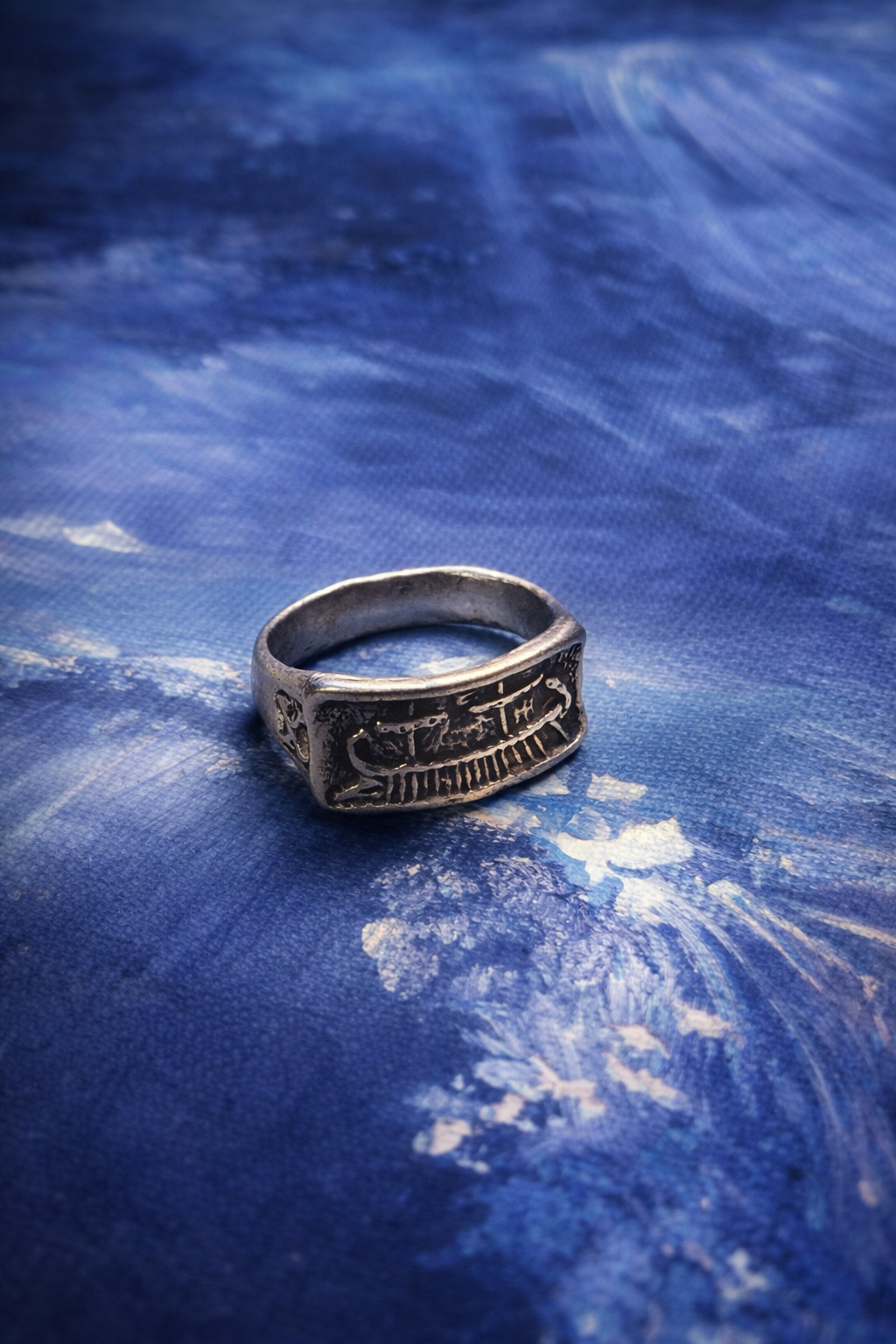
 Rome · Silver
There is a way of thinking about history in which human beings are the protagonists — the emperors, the generals, the saints and sinners — and everything else is scenery. In this way of thinking, gold is beautiful because we decided it was beautiful. Sapphires are precious because we assigned them value.
We do not think this way.
We think that the metals and stones were there first. That they observed us, if observation is a thing that matter can do. That they watched civilizations rise and believed in their own permanence — and then watched those same civilizations fall, while the metals and stones remained, waiting for the next pair of hands to find them.
Rome · Silver
"Human beings have always understood that they are temporary. This is what makes jewelry remarkable."
Human beings have always understood that they are temporary. This is what makes jewelry remarkable: it is the most direct response our species has found to its own mortality. We take a material that will outlast us and we mark it with our presence. We say: I was here. I wanted this. I gave this to someone I loved.
A Roman general wore his signet ring not merely as a symbol of authority but as a continuation of his identity beyond his own body. When he pressed the ring into hot wax, the impression he left was his face, his name, his claim on the world. The ring would outlast him. The wax would not.
The women of ancient Egypt draped themselves in lapis lazuli and carnelian not as ornament but as armor — against illness, against misfortune, against the forces that moved through the invisible world. They understood that stone held something that flesh could not hold alone.
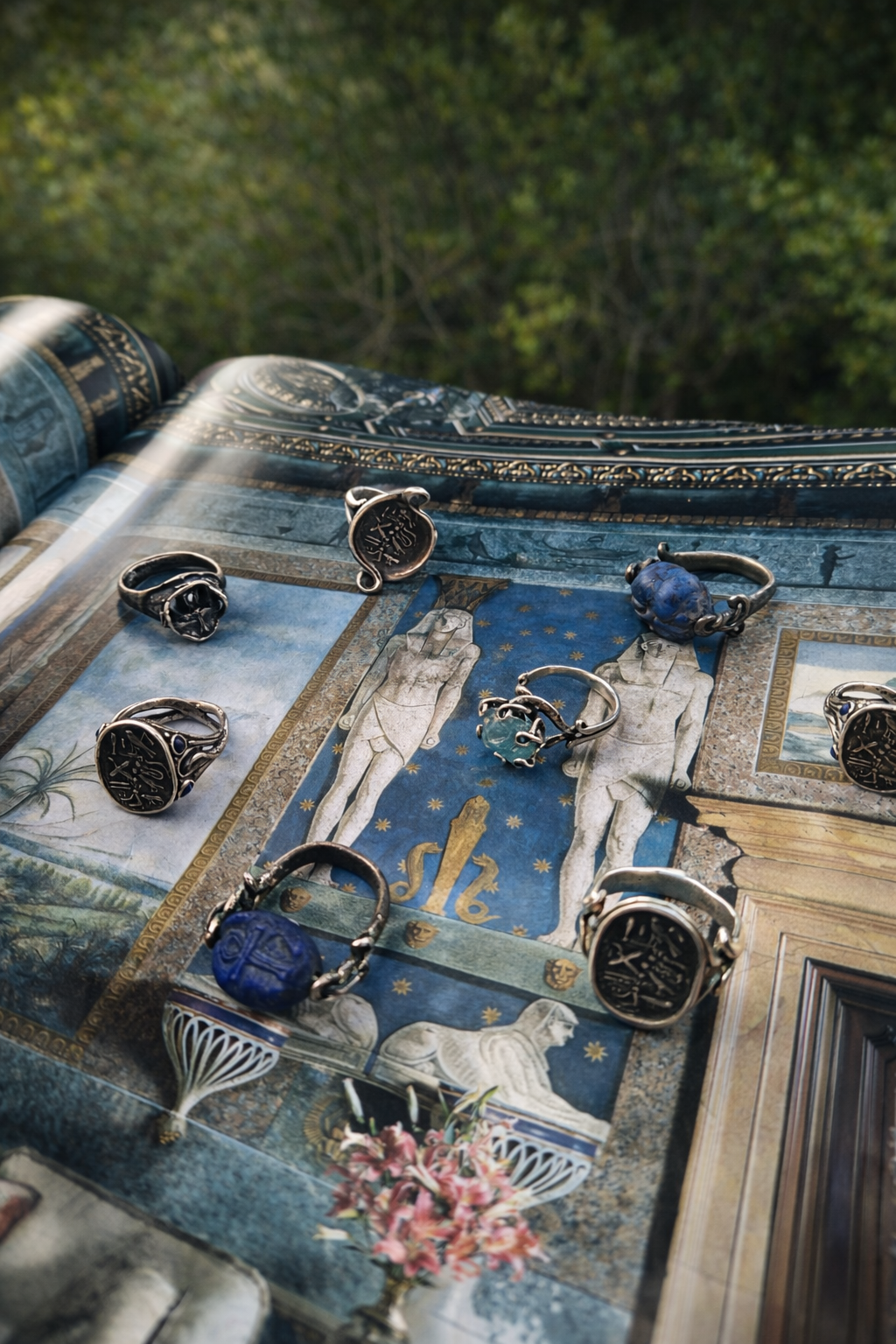 Egypt · Gold
In ancient Israel, the High Priest wore twelve gemstones across his breastplate — one for each tribe. The stones were not decorative. They were cosmological. They mapped the human community onto the structure of the universe, and in doing so, made the universe legible.
In the Norse tradition, metal was shaped into more than jewelry. It was shaped into meaning: Thor's hammer, Odin's spear, the rings exchanged by warriors to bind loyalty. Metal was the material through which promises were made physical.
Greek mythology understood gold as divine material not because the gods owned it but because it was the only thing that did not age. Achilles was offered a choice between a long life and a glorious death — he chose the death, the one that would be remembered. Gold, like that choice, does not diminish.
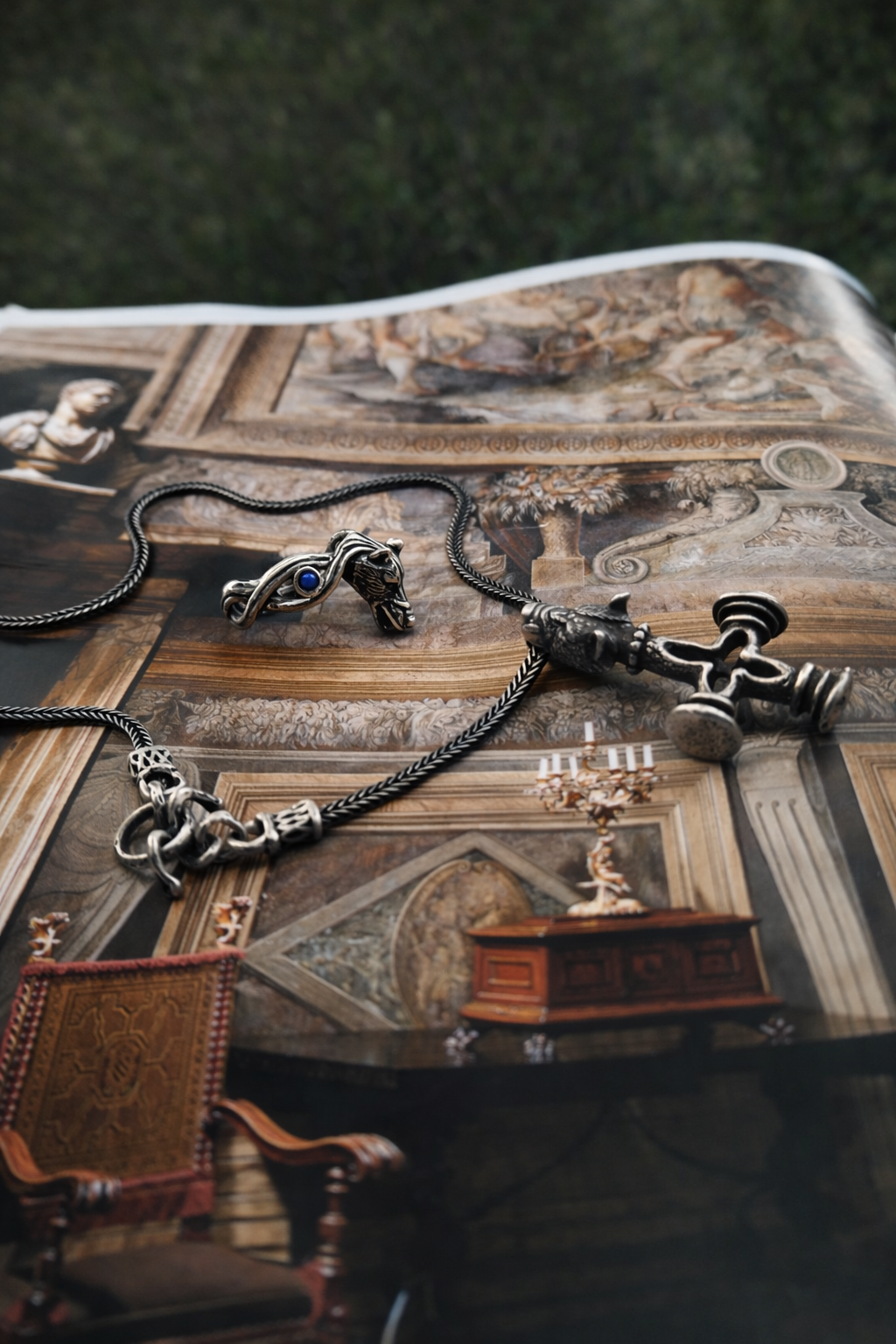 Norse · Silver
"We reach for material. We reach for something that will hold us in it."
We are not different.
The person who slides a ring onto their finger in the morning and feels something shift in their posture — something added, something affirmed — is responding to the same impulse that moved the Roman general, the Egyptian queen, the Norse chieftain.
We reach for material. We reach for something that will hold us in it. We reach for the feeling that we are not entirely alone in time — that the stone we carry has been carried before, and will be carried again.
Jewelry is not an accessory. It is a statement of continuity. A refusal to disappear entirely.
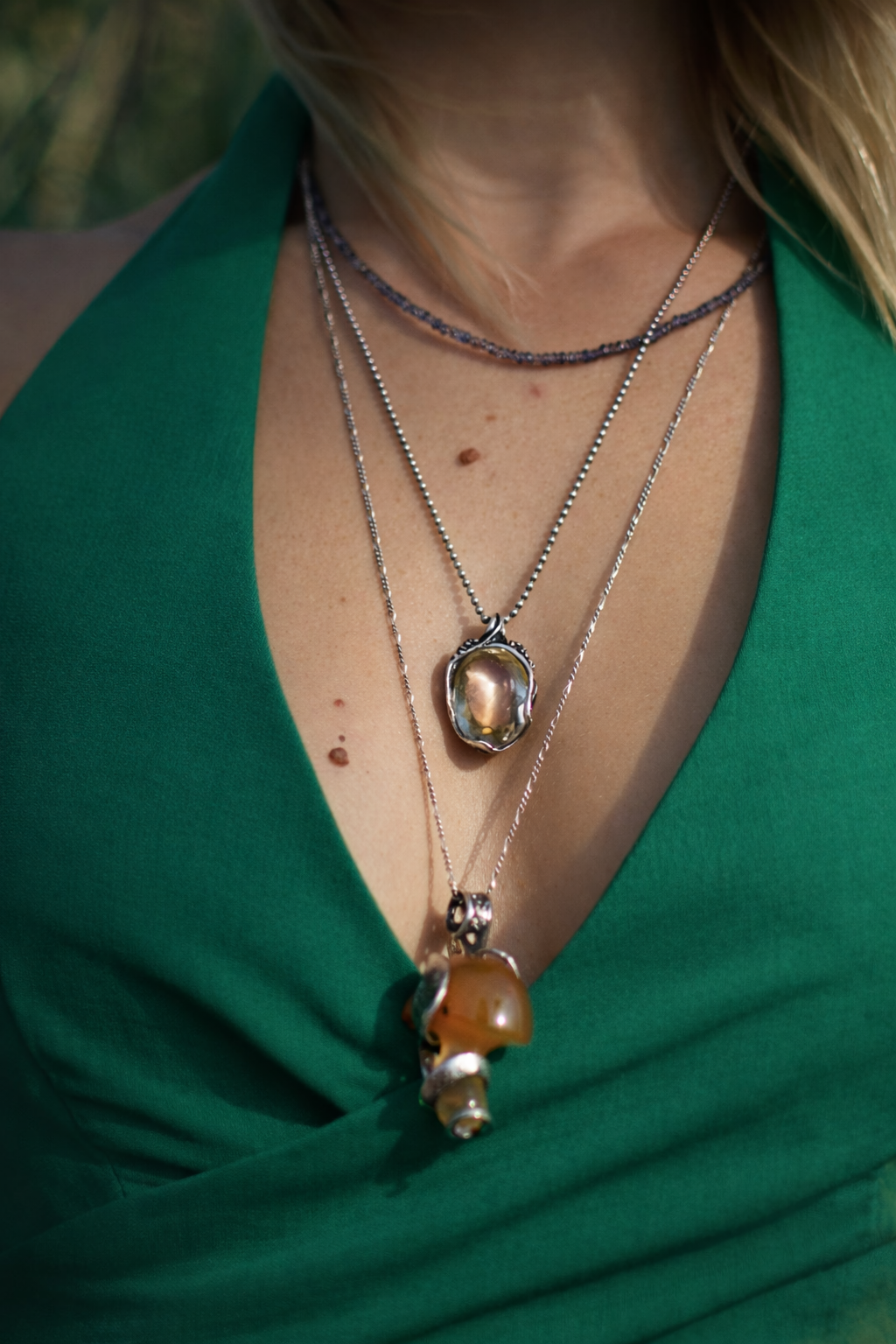 Forest · Silver
"Jewelry is not an accessory.
It is a statement of continuity.
A refusal to disappear entirely."
Every piece we make begins with this understanding. The question is never: what will look beautiful? The question is: what will mean something? To this person. With this stone. With this metal. In this moment of their life.
We are not making objects. We are making the material form of a decision. The decision to carry something. The decision to give something. The decision to mark one's own life with an object that will outlast it.
This is what we have been doing for 25 years. This is what we will keep doing.
If you feel this — if you understand what it means to want a piece of jewelry that is actually yours — then we should talk.